 Open Tech Calendar Blog
We list virtual tech events that include community participation
Open Tech Calendar Blog
Last night we gave a talk about our relaunch at Teacake Tech, a virtual tech event in Scotland. Here are the slides and transcript:
Hello, I'm talking about relaunching open tech calendar - relaunching because I first launched it in 2012.
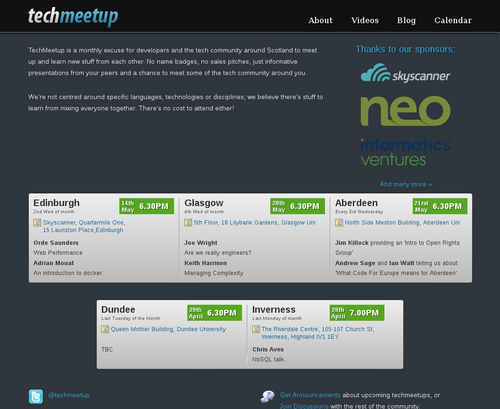
In 2012 I was involved with Tech Meetup, which ran tech events across Scotland. They always allowed other events to pitch at their events and they had a Google calendar of other events around the community. They gave edit permissions to anyone who wanted to edit this calendar. I thought this was a good service, but one day we woke up to find the calendar almost entirely deleted.
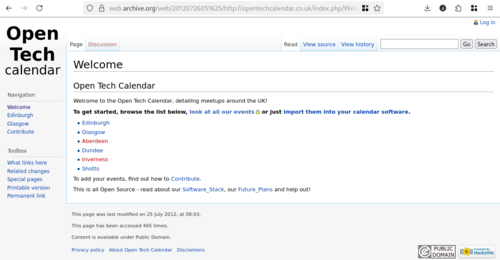
I thought this was a good service and we could make more of the data, whilst running it in a safer way. So I started Open Tech Calendar and launched the first version in a weekend. This was just a MediaWiki site with an iCal extension but it was clear from the reception that there were was interest in this and that it could be useful.
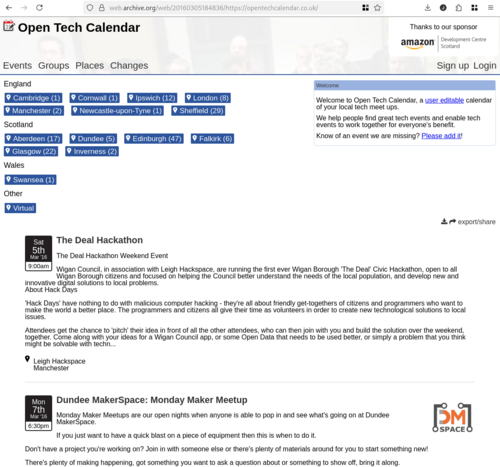
It was also clear that the editing interface was not great and so after a while we moved to our own web app. Open Tech Calendar became one of the key places around Scotland for listing tech events.
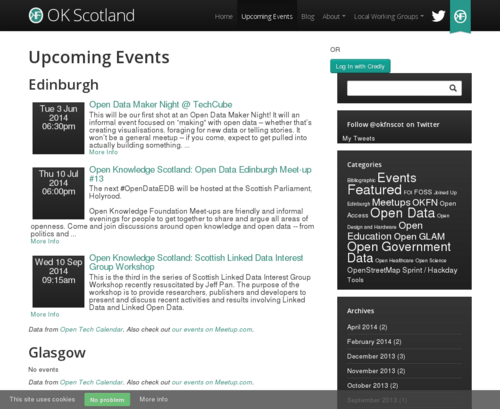
Our data was taken and reused on many other websites and places.
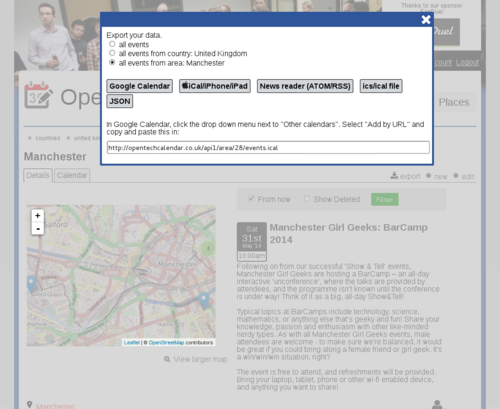
This is because we had a strong ethos of open data. We published many open data feeds in different formats and with different filtering options.
We also used open data and imported open data from other places where possible.
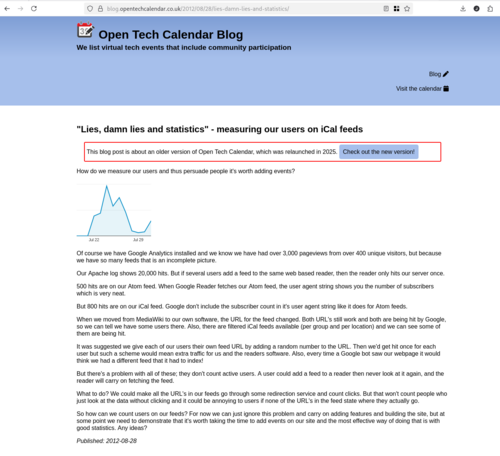
This created the problem that it was very hard to measure our users, as they were spread out on different websites and we didn't get good stats on the open data feeds. However, I felt the open data was so important that I lived with that.
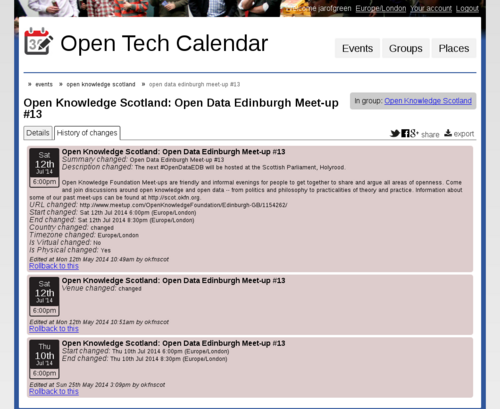
Anyone could edit anything, like a wiki, and we kept a full history of all edits for safety.
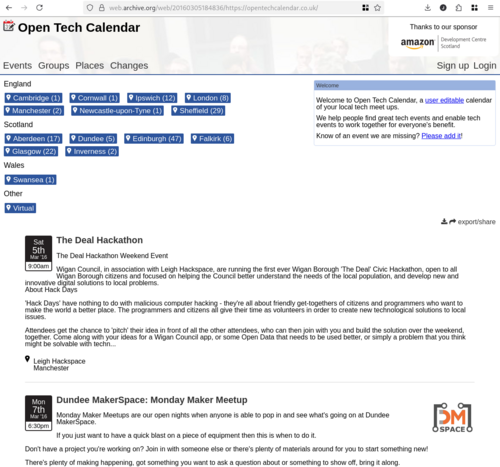
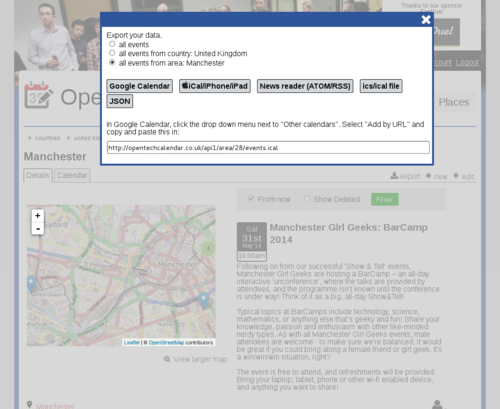
I always favored a simpler information led design. Towards the end, I got a lot of comments saying the design looked very "1990's". However half the people meant that as a compliment and told me so, and the other half didn't!
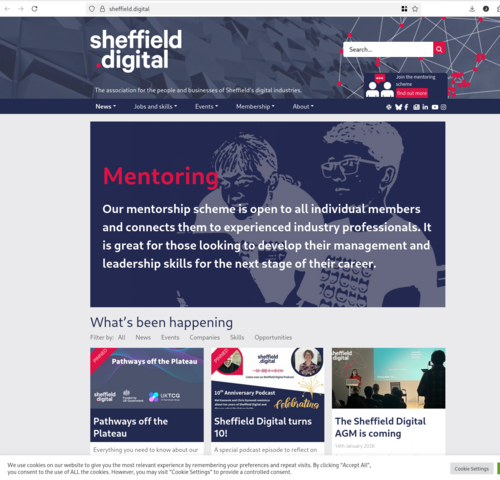
In 2019, Sheffield digital took over the calendar.
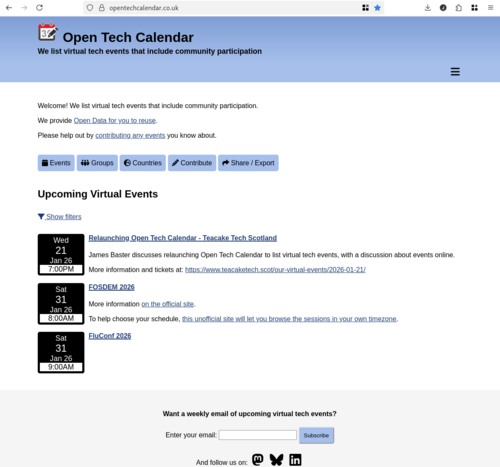
But now I've got the calendar back and I'm relaunching it to list virtual tech events.
Why virtual tech events? My partner has long Covid and I can't go out to in-person tech events so much anymore. When I talked about this on social media other people mentioned other reasons people might prefer virtual events - child care, other care responsibilities or especially in Scotland, living in rural areas.
I could frame this negatively and talk about my frustration that in-person tech events are not taking Covid measures, but I've seen a few communities that define themselves strongly by negative contrasts to something else and that's not something I like. So I've chosen to frame this positively.
Also, if you are looking for in-person events, there are now other websites in Scotland like Scottish Technology Club and Campfire.
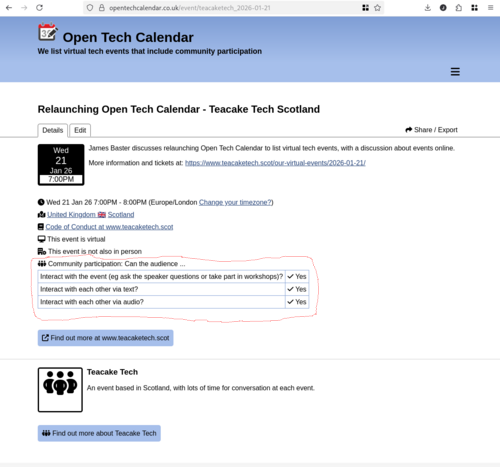
The second part of the tagline is "with community participation". Some virtual events can just be listening to a talk, and you feel it could have been a YouTube video. I'm trying to encourage events where people can get involved. We have these different categories on the website that describe how an event works, and people can search on these and get open data feeds filtered by them.
This is also why we list country and place for virtual events - some virtual events are very much rooted in an area and that helps build community.
Another thing we do and have always done is be careful not to take over the event - we redirect people to the real home of the event online.
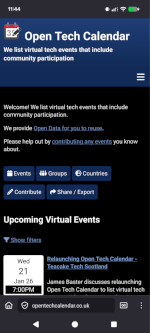
So what has changed? Dark mode is now common on the internet.
But also the rise of mobile browsing - when I started I was more worried about how many IE users I had. Now mobile browsing is very common. I was very conscious when designing the website this time to make it simpler and with more space around the touch zones so it was easy to use on mobiles.
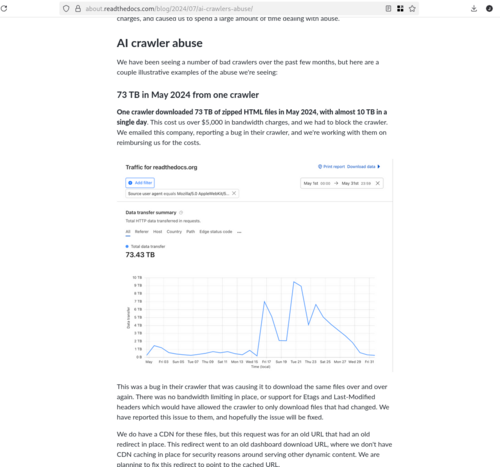
Whether AI is inevitable is a discussion for another time, but it is inevitable that it will be mentioned at tech events.
One problem of AI is aggressive scrapers who cause lots of traffic for websites, ignore robots.text, and rotate IP addresses and user agents to hide.
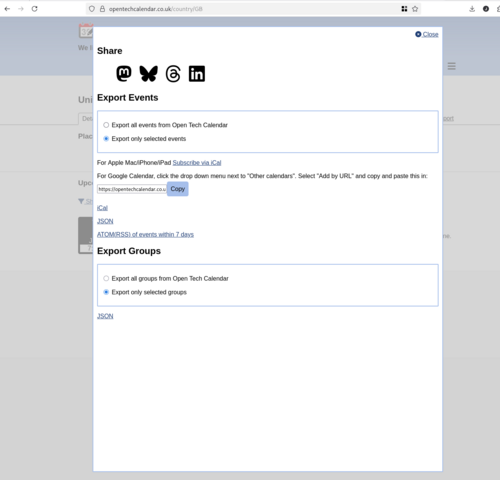
We still have a strong open data ethos and provide many open data feeds, but this means there are many URL's for aggressive scrapers to hit. It is frustrating that the first version of this web page was done in HTML, but I then replaced it with slightly obfuscated JavaScript to try and hide the end points from scrapers.
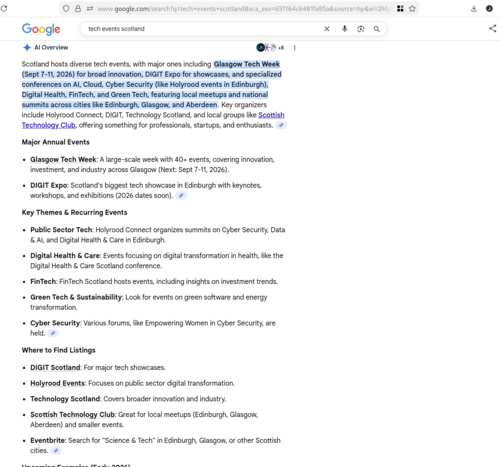
Also with AI, there is now a massive drop in organic traffic as people see results in AI summaries instead. That's just something we'll have to try and tackle, along with everyone else.
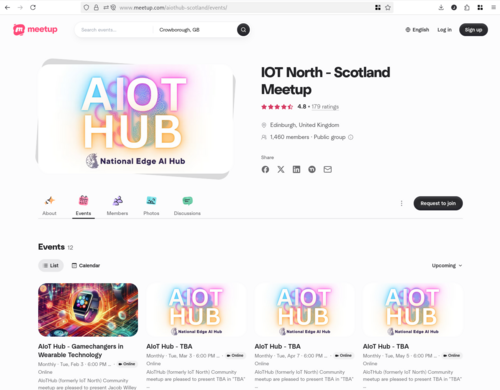
I said I wouldn't do negative but here is one slide. There is much less open data for events around now.
For example, meetup.com used to have good open data feeds of basic public information but now it's very difficult to get information out of them. To be clear, I'm just talking about public information about the event - not private information about people attending.
My plea to event organisers is make sure you provide open data somehow, and we are happy to help with that.
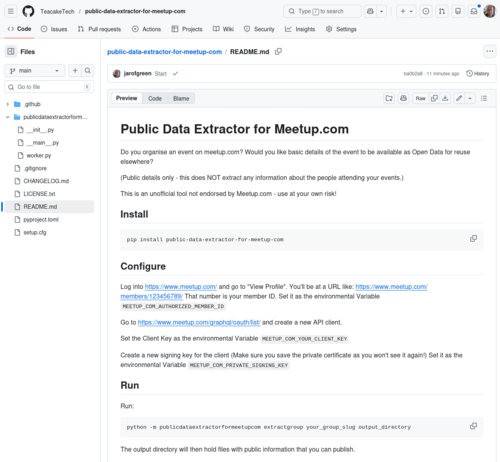
In fact, just today I've published this tool to help event organisers get basic open data out of meetup.com.
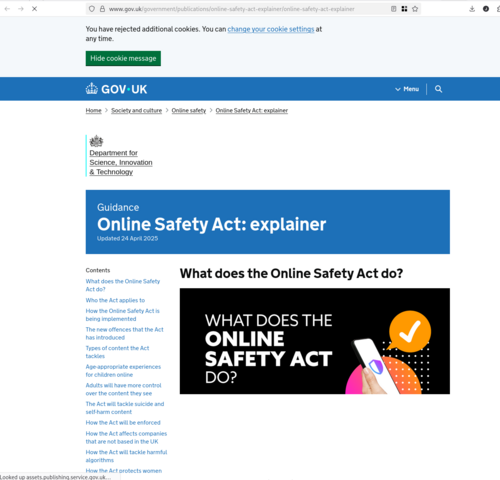
The regulatory environment has also changed, with the Online Safety Act. For now I am moderating all edits to the calendar.
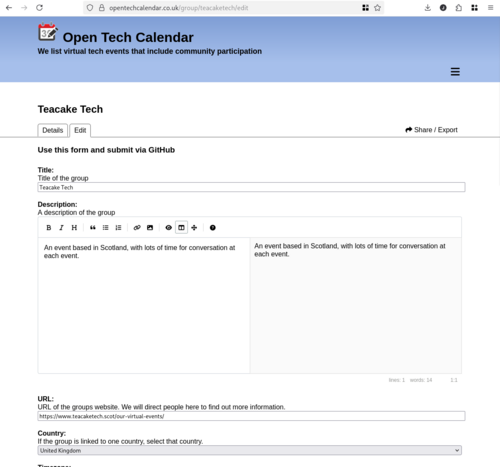
We have several web forms which make it easy for people to edit data.
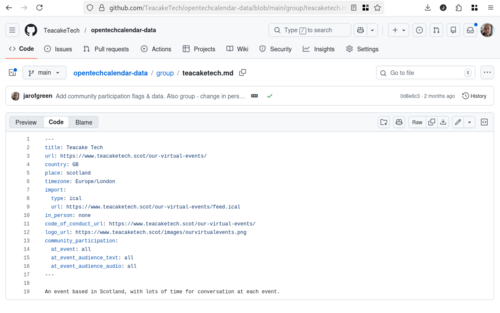
However, we are trying storing the data in a Git repository. The web forms direct people to make a pull request.
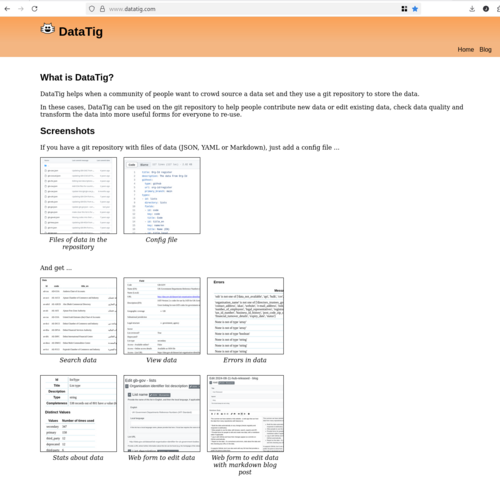
This pattern of crowdsourcing data in a Git repository is so common that for years I've been working on a side project around this, DataTig.
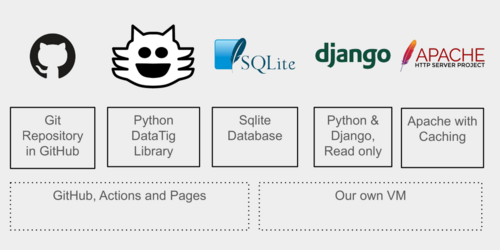
So this is our tech stack:
Data is in a Git repository, DataTig then turns that into an Sqlite database. This all happens on GitHub in its Actions and Pages features. Other Git hosts are available and we thought hard about choosing GitHub, as while it is the most popular Git host many people dislike it these days. We will keep that under review.
The Sqlite database then moves to our own virtual machine. A Django app works off the database and is read-only, which gives us good scaling options. We put Apache in front of Django and we use caching there so a lot of traffic doesn't even hit Django. We have load tested this and we get some very good numbers on a cheap VM.

So that's Open Tech Calendar. We have many missions, maybe too many:
We're keen to hear feedback in general. We're also keen to hear people's thoughts about virtual tech events. Any help finding events (let us know about good ones) and spreading the word appreciated!
Thanks to the attendees at the talk for a very good discussion afterwards. If you want to contact us with your thoughts, please do!
Published: 2026-01-23